


When medical crises strike within your household, professional paramedics aren’t instantly at your doorstep. These critical moments demand immediate action from whoever is present. Mastering cardiopulmonary resuscitation (CPR) techniques for residential emergency situations ranks among the most valuable capabilities any person can develop.
Countless families have witnessed the profound impact that knowledgeable bystanders can create during cardiac emergencies. As a family member, childcare provider, partner, or housemate, your ability to respond decisively during heart-related crises could determine whether your loved one survives.
Below, we outline four crucial phases of residential CPR implementation and explain how professional certification enhances your preparedness and effectiveness during these life-threatening situations.
Phase 1: Assess Consciousness and Activate Emergency Services
Upon discovering an unresponsive individual in your residence:
- Firmly shake their shoulders while calling out loudly, “Can you hear me?”
- When no response occurs, immediately dial emergency services (911) or delegate this task
- Request someone locate any available AED equipment while you initiate resuscitation procedures
Time is absolutely critical—begin your assessment and intervention without delay.
Phase 2: Establish Clear Airways
Position the victim on a stable, level surface, then:
- Gently tip the head backward while raising the chin to clear breathing passages
- Assess for regular respiratory patterns (excluding irregular gasping)
- Observe, listen, and sense for breathing activity within a 10-second timeframe
If normal breathing is absent or only gasping occurs, proceed immediately to compressions.
Phase 3: Initiate Chest Compression Cycles
Effective chest compressions form the foundation of successful CPR:
- Position both palms (interlocked) over the breastbone’s center
- Apply forceful, rapid compressions at 100-120 cycles per minute
- Press downward minimum 2 inches for adult patients while ensuring complete chest recoil
Trained responders should cycle between 30 compressions and 2 rescue ventilations. Untrained individuals should focus on continuous compression-only CPR until professional assistance arrives.
Phase 4: Maintain Efforts Until Relief or Recovery
Sustain your resuscitation attempts—only discontinue when:
- Natural breathing resumes in the victim
- Emergency medical personnel assume control
- Physical exhaustion prevents continuation
Though physically demanding, your interventions maintain crucial oxygen circulation to vital organs and brain tissue. Consistent effort saves lives.
The Critical Importance of Professional CPR Education
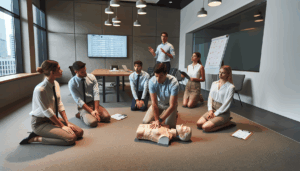
While online resources provide basic knowledge, comprehensive hands-on instruction truly prepares you for real emergency scenarios. Professional training programs deliver:
- American Heart Association-approved CPR and First Aid certification
- Instruction covering adult, pediatric, and infant resuscitation
- Expert guidance with realistic emergency simulations
- Programs designed for medical professionals, teachers, parents, and community members
- Accessible training locations nationwide
Quality education ensures composure and competence when lives hang in the balance.
Home Emergencies: Where Lives Are Won or Lost
Research from the American Heart Association reveals that approximately 70% of cardiac events occur in residential settings. This statistic means your spouse, child, parent, or neighbor may depend entirely on your immediate intervention.
Professional CPR education represents more than personal skill development—it’s a commitment to safeguarding those closest to you.
Begin Your Life-Saving Journey Today
Are you prepared to become someone’s hero during their darkest moment? Enroll in a CPR certification training and develop the practical expertise needed for emergency response.
Locate training in your area Connect with certified instructors
Your knowledge could be the difference between tragedy and triumph—start your CPR education now.